


A year after the ICAR–Central Marine Fisheries Research Institute initiated an ambitious stock enhancement programme in Ashtamudi Lake, Kerala, the short-neck clam (Paphia malabarica) population is showing promising signs of revival. Field monitoring has confirmed clear spatfall and a notable, though marginal, increase in standing stock—indicating early ecological recovery.
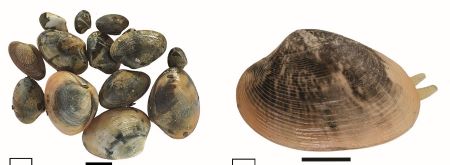
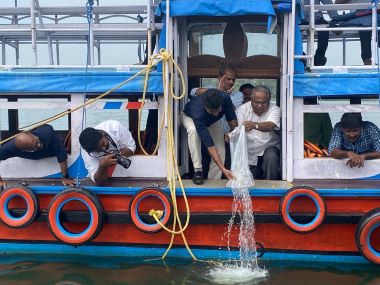
The turnaround follows the release of three million hatchery-produced clam seeds from ICAR-CMFRI’s Vizhinjam Regional Centre in December last year. Led by Dr. M. K. Anil, Principal Scientist, the intervention aimed to replenish stocks severely depleted after the 2018 floods and subsequent environmental changes. Given the high export demand for this clam species, the initiative is also crucial for strengthening the livelihoods of local fishing communities.
The sea-ranching programme forms a key component of ICAR-CMFRI’s ecosystem-based fisheries management approach under the Pradhan Mantri Matsya Sampada Yojana (PMMSY) – Blue Growth Project, designed to rebuild stressed resources and ensure the long-term sustainability of the region’s unique clam fishery.
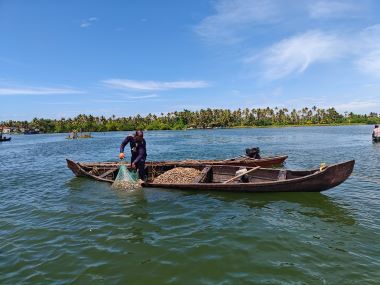
This breakthrough was made possible after a year of intensive research enabled the Institute to develop captive breeding technology for the species, ensuring a reliable supply of seeds for restocking. Early results from the monitoring experiment conducted alongside the sea-ranching initiative have been highly encouraging: the ranched clams recorded a remarkably high survival rate of 80% and reached a marketable size of 34 mm within just seven months, demonstrating the effectiveness of hatchery-based stock enhancement.
Complementing these efforts, the Shellfish Fisheries Division of ICAR-CMFRI conducted a detailed resource-mapping survey under the guidance of Dr. Geetha Sasikumar, Principal Scientist, which confirmed widespread natural spatfall in October. The smallest spat measured 2.38 mm, and the multi-modal length distribution across clam beds reflects the presence of several cohorts—an indicator of a gradually stabilizing population.
Despite these positive developments, ICAR-CMFRI emphasized that the recovery is still delicate. With the spawning season commencing in October, the subsequent months are critical for the survival of juvenile clams. To safeguard the regenerating stock, the Institute has recommended the continuation of the December–February fishery closure, a conservation measure supported by local fishers and implemented annually by the State Fisheries Department.
The encouraging progress in Ashtamudi Lake marks a significant step forward in restoring a vital fishery resource, showcasing how science-driven interventions, community support, and sustainable management practices can together revive ecosystems and empower livelihoods.
(Source: ICAR–Central Marine Fisheries Research Institute, Kochi)





Like on Facebook
Subscribe on Youtube
Follow on X X
Like on instagram