


To promote value addition and reduce post-harvest losses of tomatoes, a functional Ready-to-Serve (RTS) tomato-based beverage was formulated with 20% tomato pulp enriched with plant derived herbs as functional ingredients to enhance its nutritional, sensory and antioxidant properties.
Two product variants employing conventional and alternative sweetening systems were standardised to cater to diverse consumer preferences while providing healthier beverage options with minimal chemical additives. The developed beverage with a TSS of 14-15° Brix represents a novel approach for converting highly perishable tomatoes into a shelf-stable, value-added functional beverage with significant commercial potential.
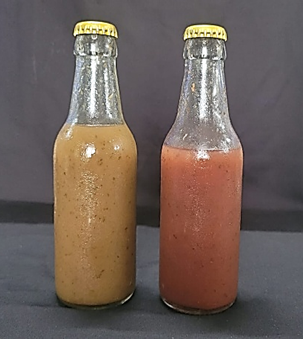
The developed beverage demonstrated good storage stability and retention of key bioactive compounds under refrigerated conditions up to 2.5 months, estimated using accelerated shelf life testing of 35 days. The optimised formulation retained lycopene, the principal tomato carotenoid, from approximately 1.35 to 0.88 mg/100 g over refrigerated storage (14°C). The incorporation of the herbs as a functional ingredient system contributed to improved protection of carotenoids and other antioxidant constituents, thereby preserving nutritional quality and overall functional attributes during storage.
The phenolic content of the product was between 155-128 μg GAE/g, while the flavonoid content of the product was 34.0-23.0 μg QE/g over the span of storage. Titratable acidity, a critical quality parameter influencing flavour, microbial stability, and preservation of tomato beverages, exhibited a gradual increase from approximately 0.28% to 0.33% during refrigerated storage. However, it remained within the recommended limits set by FSSAI.
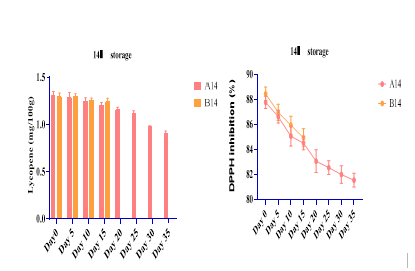
The antioxidant potential of the product was measured using DPPH inhibition percentage, which ranged from 88% to 81% indicating superior antioxidant potential essential for combating oxidative stress. The developed technology exhibits promising potential for the commercialisation of a functional tomato-based beverage and offers an effective strategy for diversifying tomato utilisation, minimising post-harvest losses and expanding market opportunities for vegetable-based health beverages, while contributing to improved nutritional security and value addition in the vegetable processing sector.
(Source: ICAR- Indian Institute of Vegetable Research Jakhini, Varanasi)





Like on Facebook
Subscribe on Youtube
Follow on X X
Like on instagram