


From a modest home-based activity to an award-winning food-processing enterprise, Anita Devi’s journey demonstrates how value addition, collective action and institutional support can empower tribal women and transform rural livelihoods.
At 35, Anita Devi, a graduate from Nawagarh Serka village in Bishunpur block of Gumla district, Jharkhand, has emerged as an inspiring example of women-led rural entrepreneurship. As the Chairperson of Sarvshri Mahila Samiti, a self-help group (SHG), she has turned the potential of locally available agricultural and minor forest produce into livelihood opportunities for rural women. Her entrepreneurial vision stems from an early experience working alongside her mother in small-scale food processing, which helped her recognise the untapped potential of value addition.
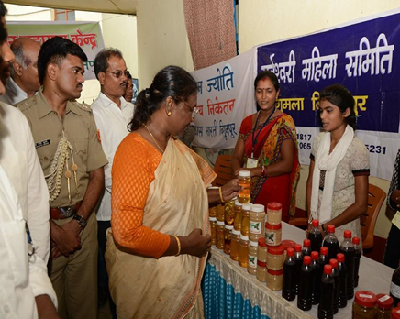
Realising that collective enterprise could generate better economic returns, Anita began exploring ways to strengthen her SHG and organise women around food processing. In 2012, she approached Krishi Vigyan Kendra (KVK), Gumla, with a plan to expand these activities. Following consultations with KVK scientists, a roadmap was developed to build the group’s capacities in the collection, grading, processing and marketing of agricultural and forest-based produce. Regular training, technical guidance and mentoring helped members improve product quality and understand market requirements. KVK also facilitated opportunities to showcase their products at Kisan Melas and exhibitions and supported market linkages with organisations such as TRIFED and PALAS, a marketing initiative associated with SHGs and supported by the district administration.
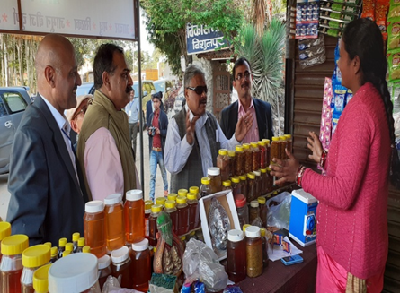
In July 2012, Sarvshri Mahila Samiti began its value addition activities with an initial investment of just ₹35,000, focusing on jamun vinegar. The group reportedly generated a net income of ₹65,000–₹75,000, demonstrating the potential of processing locally available produce into marketable products. Encouraged by these results, the members diversified into other value-added products, and the group subsequently achieved an annual turnover of approximately ₹5–6 lakh. Anita’s emphasis on product quality, organised production and the division of responsibilities among members helped establish a stronger foundation for the enterprise.
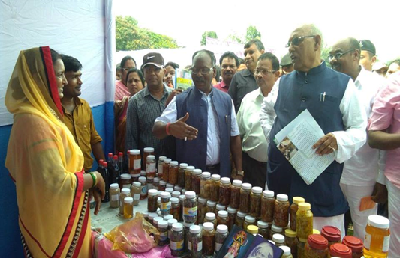
The success of the initiative inspired other rural women to adopt value addition as an additional source of income. According to reported outcomes, approximately 125 SHGs have taken up processing of agricultural and minor forest produce, including tamarind, jamun, jackfruit, elephant yam, tomato, potato, ragi, traditional rice varieties and bamboo shoots. These groups have reportedly earned additional annual incomes ranging from ₹50,000 to ₹7 lakh, depending on their scale of operations. The initiative has also supported employment generation and skill development, demonstrating how small investments and collective enterprise can create viable micro-level food-processing units.
The initiative’s expanding reach is reflected in the formation of 15 producer groups, six of which are reportedly registered with the Food Safety and Standards Authority of India (FSSAI). KVK continues to provide technical guidance and facilitate market linkages to strengthen their operations. Through these efforts, approximately 400–500 women are reported to be engaged in value addition, gaining opportunities for income generation, skill development and greater economic participation. Anita’s leadership has helped women move beyond subsistence-level activities towards organised entrepreneurship, earning recognition within their families and communities.
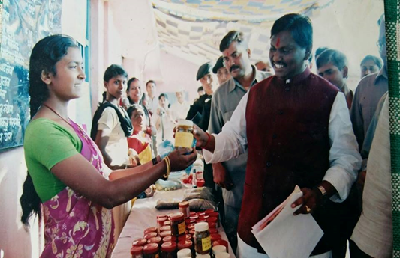
The enterprise has also received recognition at several exhibitions and food-processing events. Sarvshri Mahila Samiti was selected by the Government of Jharkhand to showcase its products at World Food India 2017, held in New Delhi from 3 to 5 November 2017 under the Ministry of Food Processing Industries, Government of India. The group also participated in Saras and National Khadi and Saras Mahotsav events in New Delhi and Ranchi. Its reported achievements include awards at Saras events in 2015 and 2016, prizes in multiple product categories at AGROTECH BAU, Ranchi, in 2015, and recognition for pickle and namkeen at BAU, Ranchi, in February 2018. These platforms helped showcase the group’s products and demonstrate the commercial potential of rural women’s food-processing enterprises.
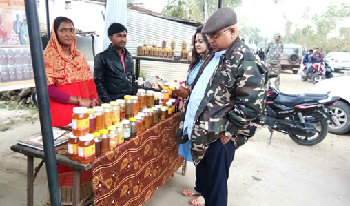
Anita’s work complements wider efforts by the Jharkhand State Livelihood Promotion Society (JSLPS) to organise rural women into groups and create self-employment opportunities. Her experience illustrates how technical support, market access and collective participation can help women make productive use of local resources while building sustainable livelihoods. Beyond income generation, the initiative has encouraged women to develop entrepreneurial skills, participate in economic decision-making and emerge as role models in their communities.
Looking ahead, Anita Devi plans to develop her enterprise into a more structured, industrial-scale food-processing unit and expand its reach across Jharkhand. Product diversification, improved production capacity and stronger market linkages are expected to create further opportunities for the women associated with the initiative.
Anita Devi’s journey demonstrates how local resources, scientific guidance and collective entrepreneurship can transform small-scale food processing into a driver of women’s empowerment. By creating livelihood opportunities and inspiring hundreds of rural women to embrace value addition, she is helping turn traditional knowledge into economic opportunity and building a pathway towards greater financial independence and sustainable rural development.
(Source: Krishi Vigyan Kendra, Gumla)





Like on Facebook
Subscribe on Youtube
Follow on X X
Like on instagram