


Dr M. L. Jat, Secretary, DARE and Director General, ICAR, observed that Jodhpur based ICAR- Central Arid Zone Research Institute’s improved moth bean varieties hold significant potential to transform the Thar Desert by enhancing agricultural productivity, strengthening farmers’ livelihoods and advancing India’s journey towards self-reliance and Viksit Bharat @ 2047.
In the hot, arid landscape of western Rajasthan, where erratic monsoon rainfall, prolonged dry spells and declining soil moisture frequently threaten crop production, moth bean (Vigna aconitifolia) offers farmers a promising agricultural option. This hardy, short-duration pulse crop is adapted to harsh climatic conditions and has the potential to support farm incomes in drought-prone regions.
Through sustained research and varietal improvement, ICAR–CAZRI, Jodhpur, has developed improved moth bean varieties suited to the region’s challenging agroclimatic conditions. Their field performance illustrates how location-specific agricultural research can help farmers manage climatic uncertainties and improve production in arid ecosystems.
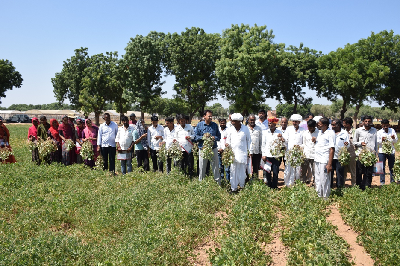
Moth bean is one of the most important pulse crops of the Thar Desert, occupying nearly 10 lakh hectares. Despite its adaptation to dry environments, average productivity remains below 350 kg/ha due to scanty and erratic rainfall, poor soil fertility, high evaporative demand and recurrent moisture stress. Improving yields under these conditions requires varieties capable of sustaining growth, flowering and pod development with limited water availability.
The 2026 growing season presented a demanding test for moth bean cultivation. Between 10 July and 10 September, cumulative pan evaporation reached approximately 366.7 mm, while total rainfall was only 189.9 mm. A prolonged dry spell of 38 days further intensified moisture stress during critical stages of flowering, pod formation and reproductive development.
Despite these conditions, improved moth bean varieties at the ICAR-CAZRI experimental farm maintained green foliage, active growth and pod development. Under rainfed conditions, a productivity of more than 11 quintals per hectare was recorded across a 7-hectare experimental area. The results were also encouraging in farmers’ fields in Osian Tehsil of Jodhpur district, where yields of approximately 8 quintals per hectare were harvested despite rainfall occurring on only two occasions, at 15 and 35 days after sowing (DAS).
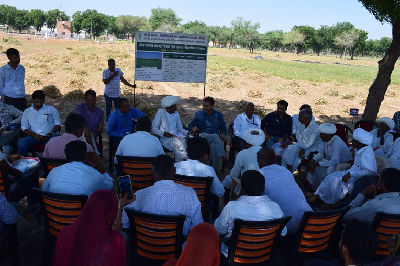
These observations demonstrate the potential of improved varieties to sustain crop development under moisture-deficient conditions and highlight the value of combining genetic improvement with appropriate agronomic practices. Timely sowing in July helped utilise available monsoon rainfall, while optimum spacing of 45 × 10 cm facilitated crop establishment. Interculture at 20 DAS helped conserve soil moisture, and mechanical and manual weeding reduced competition for limited water and nutrients. Early canopy development enabled effective ground coverage, while the crop’s developmental plasticity supported growth under changing moisture conditions.
The improved varieties began flowering at approximately 30 days after sowing and progressed towards pod formation by utilising available soil moisture. These characteristics are particularly relevant to western Rajasthan, where rainfall varies considerably in amount, timing and distribution. The ability to maintain growth and progress through reproductive stages after rainfall ceases can help reduce the risk of crop failure. The results underscore the importance of integrating suitable varieties, timely field operations and efficient use of available moisture in rainfed agriculture.
The potential of moth bean extends beyond the Thar Desert. Rainfed regions of Vidarbha and Marathwada in Maharashtra, along with selected drought-prone districts of Gujarat and Karnataka, face recurring challenges associated with rainfall variability, prolonged dry spells and uncertain farm incomes. In suitable agroclimatic areas, moth bean could provide an additional short-duration pulse option, enabling farmers to diversify cropping systems and make better use of limited seasonal rainfall. Its suitability for these regions would need to be established through location-specific trials, assessment of soil and climatic conditions, and evaluation under local farming systems.
Moth bean also offers an opportunity to support India’s efforts to strengthen domestic pulse production and reduce import dependence. The Mission for Aatmanirbharta in Pulses (2025–26 to 2030–31) aims to enhance pulse production, expand cultivation in suitable areas, strengthen seed systems and improve farmers’ incomes. Crops such as moth bean can complement these efforts, particularly in regions where water scarcity limits conventional cropping options.
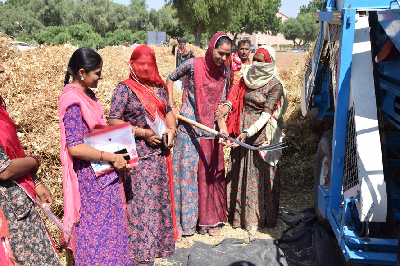
Through sustained research on arid-zone agriculture, ICAR–CAZRI is developing location-specific technologies to address the needs of farmers in moisture-deficient environments. Realising their wider impact will require continued field validation, quality seed availability, effective technology dissemination and adoption of appropriate crop management practices.
The encouraging performance of ICAR-CAZRI’s improved moth bean varieties during the challenging 2026 growing season highlights how scientific innovation can create new opportunities for arid agriculture. By integrating improved varieties, suitable agronomic practices and strengthened seed-delivery systems, moth bean can contribute to better farm productivity, more secure livelihoods and greater self-reliance in pulses.
From the fields of the Thar Desert to other suitable dryland regions, moth bean offers a pathway towards productive agriculture, stronger rural livelihoods and a self-reliant India on the journey to Viksit Bharat @ 2047.
(Source: ICAR- Central Arid Zone Research Institute, Jodhpur)





Like on Facebook
Subscribe on Youtube
Follow on X X
Like on instagram