


28 October 2026, Barrackpore
Promoting sustainable aquaculture and eco-friendly farming practices, the ICAR–Central Inland Fisheries Research Institute, Barrackpore, organised a Capacity Enhancement Programme on Inland Fisheries Management for 31 progressive farmers and rural youth from Rohtas district, Bihar, under the national KhetBachaoAbhiyan – Rabi 2026. The programme demonstrated how scientific fish farming, vermicomposting and organic nutrient management can be integrated to improve fish productivity, conserve natural resources and create sustainable livelihood opportunities.
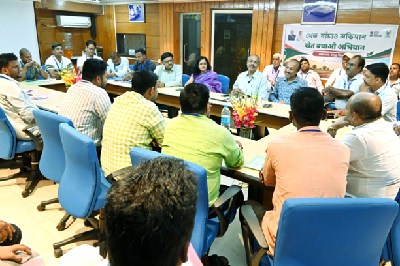
Inaugurating the programme, Dr Pradip Dey, Director, ICAR-CIFRI, called for a science-led transformation of agriculture and fisheries through sustainable, resource-efficient and climate-resilient practices. Highlighting the adverse impacts of indiscriminate fertiliser use on soil health, water quality and aquatic ecosystems, he advocated soil-test-based fertiliser application, balanced nutrient management and the judicious use of biofertilisers and organic inputs.
Articulating a forward-looking vision, Dr Dey emphasized that the future of agriculture and fisheries must be defined not merely by higher production, but by the ability to generate greater economic value while conserving natural resources and safeguarding ecosystem health. He envisioned a future where agricultural productivity and ecological sustainability advance together, contributing to a resilient rural economy and the national vision of Viksit Bharat @ 2047.
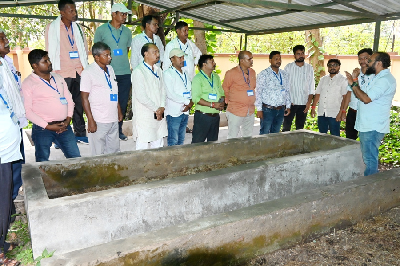
ICAR-CIFRI scientists delivered technical sessions on soil health conservation, balanced fertiliser application, pond-bottom soil assessment and nutrient management in aquaculture. Emphasis was placed on maintaining pond productivity, improving water quality and enhancing fish production while safeguarding ecological balance. Farmers also interacted with the scientists, gaining insights into scientific approaches to inland fisheries management.
A key highlight was the hands-on demonstration of vermicompost and vermiwash applications in aquaculture, alongside practical training in vermicompost preparation. Participants learned how biodegradable waste can be converted into nutrient-rich organic manure, supporting resource recycling and reducing dependence on chemical inputs. ICAR-CIFRI also showcased its waste-to-wealth vermicomposting model and a low-cost, vermicompost-based culture medium for freshwater microalgae production in fish hatcheries, illustrating practical opportunities to make aquaculture more resource-efficient and affordable.
Through this initiative, ICAR-CIFRI reinforced the importance of linking fisheries with sustainable soil and nutrient management. By translating scientific knowledge into practical skills, the programme sought to strengthen farmers’ capacity for environmentally responsible aquaculture, efficient resource utilisation, nutritional security and resilient rural livelihoods. The initiative reflects the objectives of KhetBachaoAbhiyan – Rabi 2026 to encourage sustainable production practices and promote the long-term health of agricultural and aquatic ecosystems.
(Source: ICAR–Central Inland Fisheries Research Institute, Barrackpore)





Like on Facebook
Subscribe on Youtube
Follow on X X
Like on instagram