

22 December 2025, Jammu
The Annual Zonal Workshop of Krishi Vigyan Kendras of Zone-I was inaugurated today at the Sher-e-Kashmir University of Agricultural Sciences and Technology of Jammu (SKUAST-Jammu). The three-day workshop, scheduled from 22 to 24 December 2025, aims to review the performance of KVKs during the preceding year and to formulate a zonal-level action plan for the forthcoming year through systematic problem prioritisation.
Shri Javid Ahmad Dar, Minister for Agriculture Production, Rural Development, Panchayati Raj, Cooperatives and Election Departments, Government of Jammu and Kashmir, graced the inaugural session as the Chief Guest.
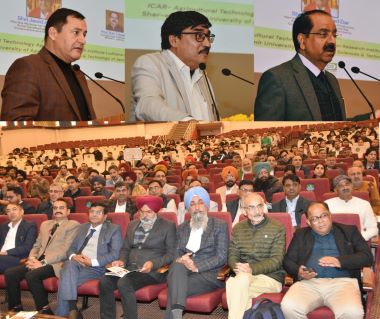
The event was attended by several eminent dignitaries, including Dr Rajbir Singh, Deputy Director General (Agricultural Extension), ICAR; Prof. B. N. Tripathi, Vice-Chancellor, SKUAST-Jammu; Dr Parvender Sheoran, Director, ICAR-ATARI, Ludhiana; and Dr Amrish Vaid, Director of Extension Education.
Addressing the gathering, Shri Javid Ahmad Dar emphasized that the country is yet to realise its full agricultural potential and that farmer distress continues to be a major concern. He stressed the need to ensure that farmers are fully integrated into the mainstream of development and called for further strengthening of the university–KVK network to support farming communities. Referring to the Holistic Agriculture Development Programme (HADP), he noted that initiatives such as rural exploration would yield positive outcomes in the coming years, while underscoring that developmental programmes should not compromise the teaching mandate of agricultural universities.
Prof. B. N. Tripathi, Vice-Chancellor, SKUAST-Jammu, traced the evolution of India’s agricultural research system from a food-deficit era to becoming a global exporter of agricultural commodities. He underscored the strength of the Indian system in its close integration of research and extension, noting that the KVK–farmer network is among its most successful components. He cautioned that any dilution of the KVK network would weaken farmer linkages and assured that both the university and the state government are making substantial investments to strengthen KVKs. He also expressed optimism regarding the resolution of issues related to staff pay norms and the filling of vacant positions.
Dr Rajbir Singh, highlighted that although Zone-I accounts for only about four per cent of the country’s cultivated area, it contributes nearly ten per cent of the national agricultural output. He described the workshop as an important platform for cross-learning and experience sharing among KVKs across states. Identifying climate change as the most significant challenge confronting agriculture in the zone, he stressed the need to sensitise and train farmers in climate-resilient farming practices, reiterating that KVKs must function as one-stop solution centres for farmers. He also spoke on the Viksit Krishi Sankalp Abhiyan (VKSA) as a tool for problem identification and demand-driven research, informed that VKSA publications have been disseminated nationwide, and highlighted initiatives such as developing farmers as Master Trainers and Professor Practitioners. Conservation agriculture, high-density apple planting, integrated pest management with residue-free production for export, and efforts to address large-scale vacancies in KVKs were also highlighted.
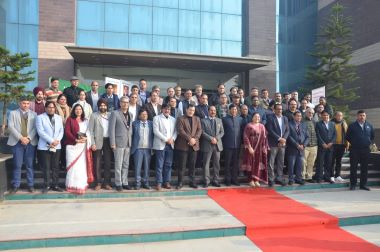
Earlier, Dr Parvender Sheoran, Director, ICAR-ATARI, Ludhiana, presented a comprehensive overview of Zone-I, highlighting its agro-ecological diversity, strengths, and constraints across states, KVKs, and host institutions. He drew attention to increasing climatic vulnerabilities, including recent flood events and rising temperatures during March–April, and flagged concerns related to vacant positions and an ageing workforce in KVKs. He emphasized that the primary objective of the workshop is to review annual progress and develop a demand-driven zonal action plan for the upcoming year.
The workshop witnessed the participation of nearly 200 delegates, including Directors of Extension Education, Heads of KVKs, scientists, progressive farmers, faculty members, university staff, and students. During the programme, six progressive farmers and Farmer Producer Organizations (FPOs) were felicitated in recognition of their contributions to agricultural development.
(Source: ICAR-Agricultural Technology Application Research Institute, Ludhiana)





फेसबुक पर लाइक करें
यूट्यूब पर सदस्यता लें
X पर फॉलो करना X
इंस्टाग्राम पर लाइक करें